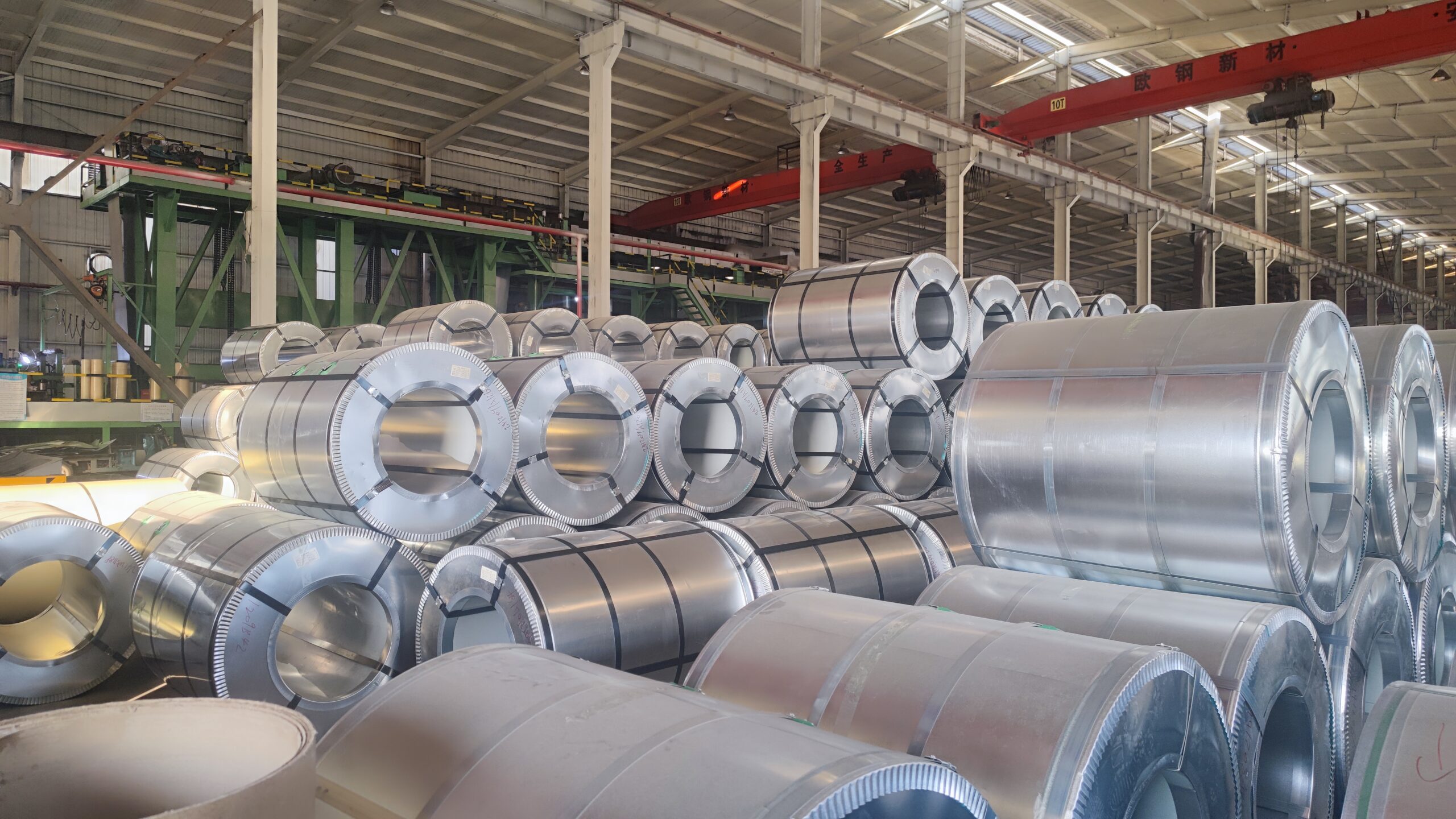
Galvanized steel sheets play a crucial role in various industries, offering economic and effective rust protection. Approximately half of the world’s zinc production is dedicated to galvanization, highlighting its global demand and significance. This article explores the classifications of galvanized steel sheets and their surface treatment methods to enhance performance and durability.
Classification of Galvanized Steel Sheets
Galvanized steel sheets are primarily categorized based on their production and processing methods:
- Galvanized Steel Sheet: A steel sheet coated with a layer of zinc. This method is widely adopted for its cost-effectiveness and anti-corrosion properties.
- Hot-Dip Galvanized Steel Sheet: Produced by immersing cold-rolled or hot-rolled steel strips into molten zinc in a continuous hot-dip galvanization line.
Hot-dip galvanized sheets can be further divided into:
- Hot-Dip Pure Zinc Sheet: Contains over 99% zinc in the molten zinc bath.
- Hot-Dip Zinc-Iron Alloy Sheet: Also contains over 99% zinc but undergoes alloying treatment to form a zinc-iron alloy layer with an iron content of 7–15%.
- Hot-Dip Aluminum-Zinc Sheet: Composed of approximately 55% aluminum, 15.6% silicon, and the remainder zinc, offering enhanced corrosion resistance.
Surface Treatment Methods of Galvanized Steel Sheets
The surface treatment of galvanized steel sheets improves their durability, corrosion resistance, and functionality. The primary treatment methods include:
- Passivation:
Passivation forms a protective film on the surface to reduce the risk of white rust in humid conditions. Depending on the type of passivation film, it can be classified into hexavalent chromium, trivalent chromium, or chromium-free passivation. This method is not typically used for zinc-iron alloy sheets. - Oiling:
Applying oil prevents moisture-induced rusting. However, due to its volatility, oil only offers temporary protection. Application methods include electrostatic oiling and roller coating. Combining oiling with passivation offers better rust prevention, especially for substrates requiring lightweight oiling treatments. - Paint Sealing (Anti-Fingerprint Coating):
A thin anti-fingerprint protective film is applied to the surface to prevent marks during handling and enhance corrosion resistance. This method is commonly used in home appliances that demand a high-quality finish. - Chromic Acid Treatment:
By immersing the steel sheet in a chromic acid solution, a thin, low-activity film forms on the surface. Even if the film is slightly damaged, the chromic acid salts dissolve and re-coat the area, providing self-healing protection against white rust.
The Role of Galvanized Steel Sheets
Galvanized steel sheets are extensively used in applications requiring rust resistance to ensure the longevity and precision of equipment. With high production efficiency, roughly half of all refined zinc globally is allocated to galvanized steel sheet manufacturing, reflecting their significant demand. Their widespread usage in industries highlights their importance for economic considerations and precise performance requirements.